
Content Marketing
“I create content that demonstrates authority and builds connection.”
Content Marketing. more than words
Content marketing within a B2B production environment is about more than visibility, it’s about knowledge transfer, authority, and creating lasting connections.
Through whitepapers and expert articles, I provide both internal and external stakeholders with insight and clarity, positioning our brands as market leaders.
With glossy magazines and case studies, I focus on connection and experience — creating content that people keep and share, rather than delete. This blend of inspiration and evidence fosters trust and firmly anchors our brands to market leadership. My approach is both strategic and hands-on: using content as a foundation to make ideas resonate, express authority, and build sustainable brand value.
It is always important to connect everyone within the company — from administrative staff to logistics employees, and from the CEO to machine operators. If an organisation wants to be successful, it must start with its Corporate Identity, which means fostering greater awareness and appreciation among all colleagues. Around 2014, this concept was introduced through an internal glossy magazine (unfortunately, I cannot share examples).
The magazine contained various elements, such as project highlights demonstrating where the company’s products were being used, an inspiring foreword from the CEO (which I often edited), a feature introducing a colleague, updates on international developments, and more.
In initiatives like these, it is equally important to involve the home environment. There are excellent techniques that allow the cover of a magazine to be personalised with, for example, the recipient’s name. Sending the magazine to the employee’s home address encourages the entire household to browse through it and experience what the organisation is creating and achieving. Such a personalised publication is often highly appreciated and can even be perceived as a small gift.
Employee branding - personalised magazine
Hoe bereik je een stakeholdergroep wanneer je bijvoorbeeld werkzaam bent in de maakindustrie en waar het productportfolio niet echt onderscheidend is?
Denk aan de architect die keuzes moet maken vanuit esthetiek, de vastgoedgroep die het product kiest op basis van Total Cost of Ownership, of de ontwikkelende aannemer die margeoptimalisatie nastreeft door eenvoud en kwaliteit.
Het antwoord is simpel: je laat je resultaten zien, je zorgt voor ambassadeurschap door middel van interviews met architecten en je koppelt belangrijke ontwikkelingen op basis van innovatie en duurzaamheid direct aan deze propositie.
Een 'old school' glossy magazine bewijst nog steeds haar waarde. Het is eenvoudig per post te versturen, handig als er events of beurzen zijn en je hebt wat in de hand om achter te laten bij een klantbezoek.
Architect branding - Architect magazine
Multiple times a year, Lunch & Learn sessions were organised at architectural firms, in collaboration with two other manufacturers of high-end building products and an architectural platform. This joint approach allowed us to present a broader and more comprehensive narrative to architects.
To ensure that the knowledge shared during the session did not fade immediately afterwards, a magazine was left behind. This glossy publication featured the most noteworthy projects from each participating supplier, including short introductions of the speakers representing their companies.
Lunch & Learn -
Spin-off magazine
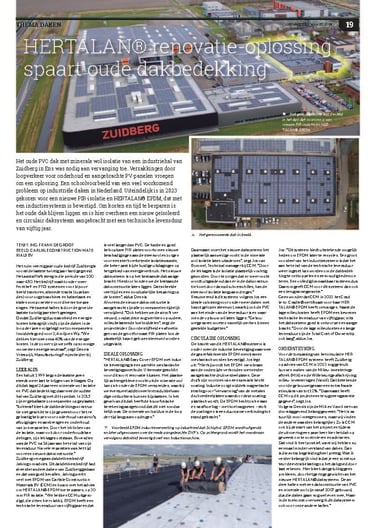
On the renovation of 1990s PVC roofs using an innovative EPDM roofing system.
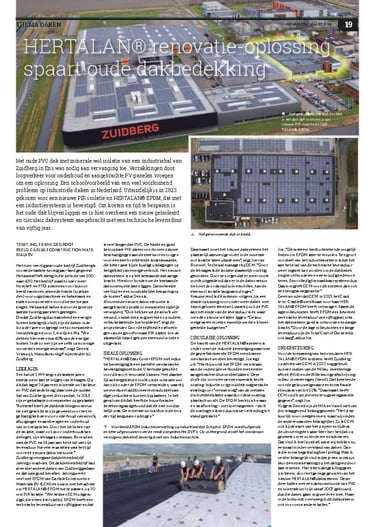
The largest EPDM roof in the Netherlands, circular and sustainable.
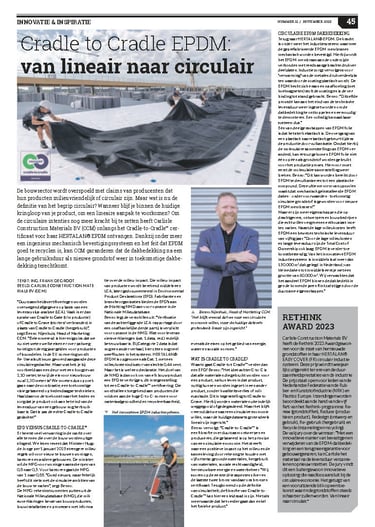
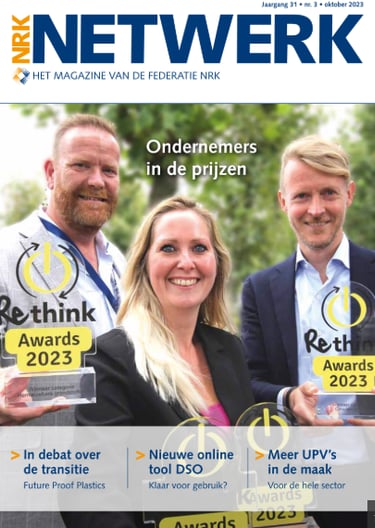
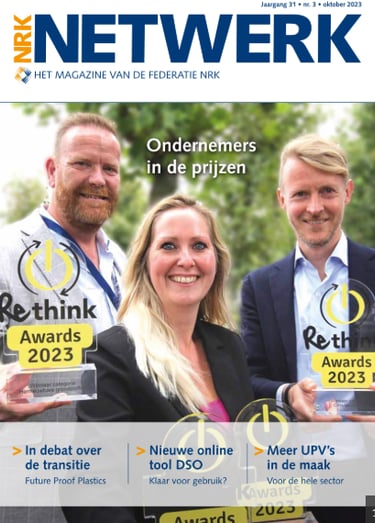
On the recognition received through the Rethink Award for sustainable innovation.
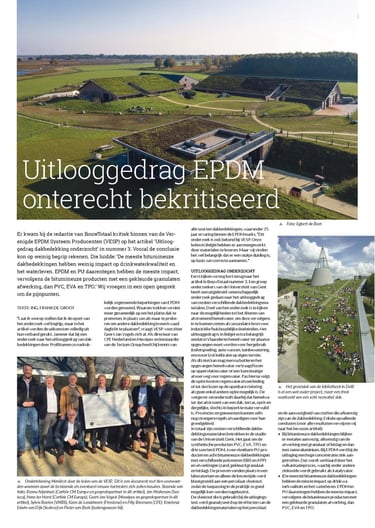
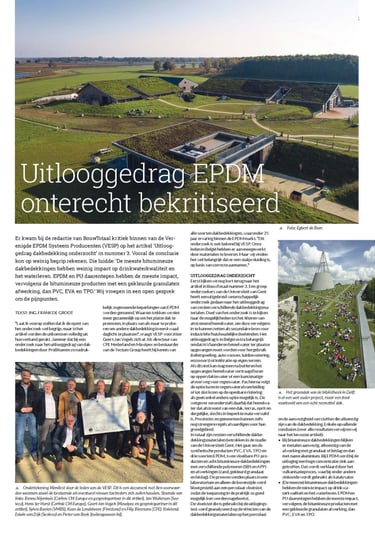
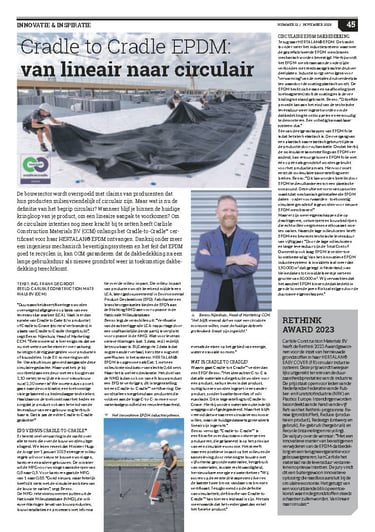
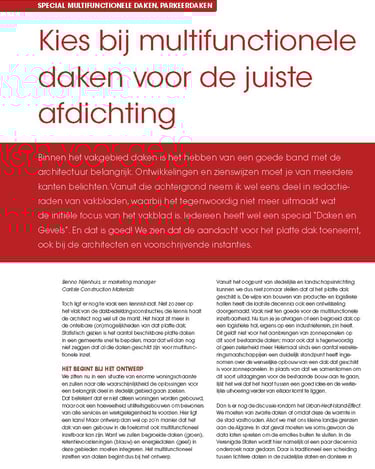
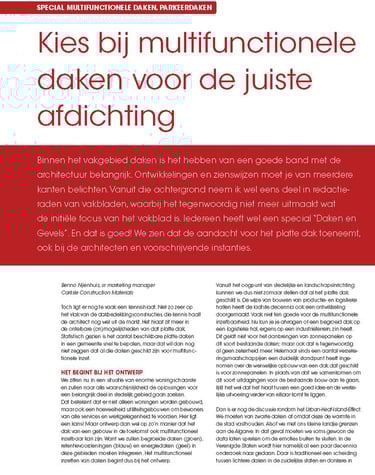
A comprehensive VESP article written in response to negative reporting from the bitumen industry.
Contact
Also visit my UK profile on LinkedIn or request my CV in Dutch, English, or German.
benno.nijenhuis@outlook.com
+31 6 18724238
© 2025. Benno Nijenhuis