
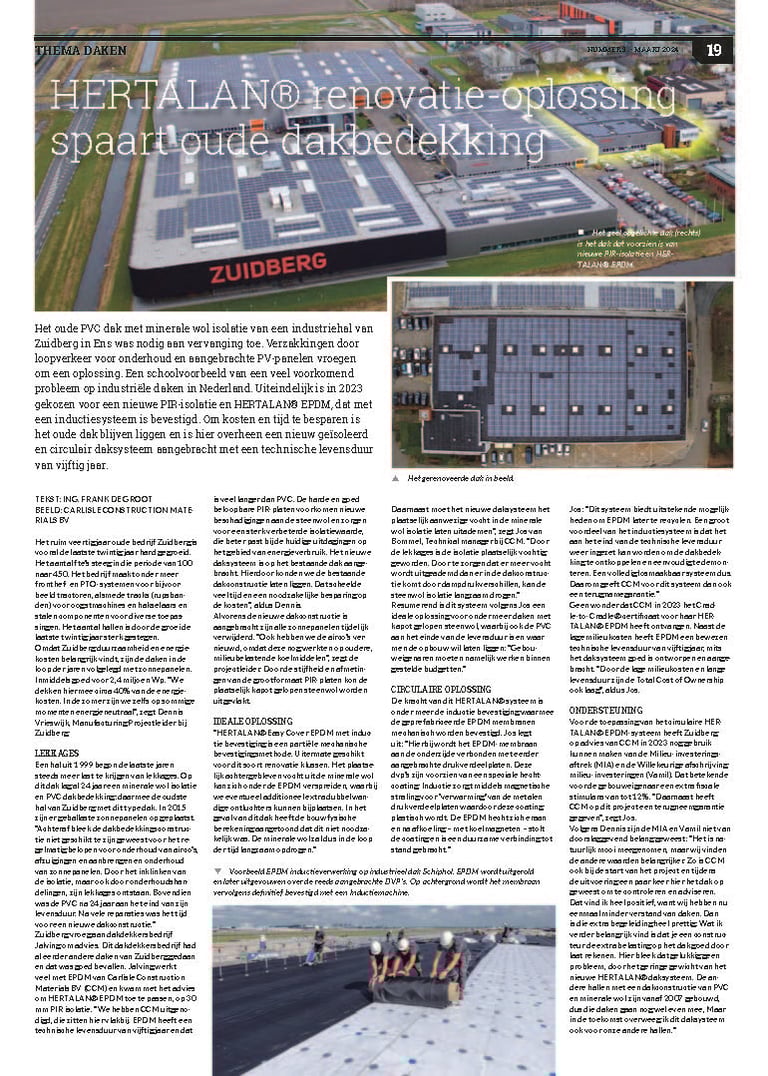
The Renovation solution for old PVC roofs
I do not have the current figures clearly in mind, but recently, between 60 and 65% of all flat roofs in the Netherlands were renovation roofs.
Establishing the concept of 'renovation' is quite challenging, partly because the majority of the roofs eligible for this are bituminous roofs. This is logical, as they are the first to require replacement (especially if they were installed in the 1980s and 90s).
Another category includes the PVC roofs that were frequently installed on commercial buildings in the early years. We are also talking about the 1990s here.
These roofs were subsequently often used in the 2000s and later for installing solar panels. This was despite many of those roofs being completely unsuitable for that purpose. This was mainly due to the application of mineral wool insulation (which is often not walkable).
Add one and one together, and you get damaged roofs, leaks that only became visible after several years, and roofs that no longer meet the desired comfort insulation standards.
I embraced this positioning in 2024. This is primarily thanks to Hertalan's induction fastening system, a thorough building physics assessment and calculation, a new extra hard PIR insulation, and attention to ventilation.
In addition to a new, up-to-date roof that will last for decades, the biggest advantage for the client here is that they can leave the old roofing material in place:
No disposal costs
No unnecessary interruption of production or storage in that facility
Contact
Also visit my UK profile on LinkedIn or request my CV in Dutch, English, or German.
benno.nijenhuis@outlook.com
+31 6 18724238
© 2025. Benno Nijenhuis