Circularity
"Translating Circularity into Tangible Value and Sustainable Competitive Strength"
Circularity as business model
In the European manufacturing industry — and particularly within corporate organizations — sustainability is no longer a side condition, but a strategic accelerator for growth.
Circularity and ESG criteria increasingly determine the direction not only of stakeholders, but often of shareholders as well. For manufacturers, this means creating value by optimizing existing systems, designing smarter, extending product lifecycles, and closing material loops.
With more than 20 years of experience in the B2B production environment, I help organizations translate sustainability into a distinctive market position — not through abstract promises, but through tangible propositions that comply with regulations, reduce ecological footprint, and deliver measurable commercial impact.
My strength lies in connecting market opportunities with operational reality.
Whether it concerns Life Cycle Assessments (LCA’s), positioning within the National Environmental Database (NMD), or developing a brand strategy that makes sustainability credible and measurable — I build bridges between vision and execution.
For me, circularity is not a trend. It is a future-proof foundation for brand value and lasting competitive strength.
External market development
"Where will we source our raw materials in the future?"
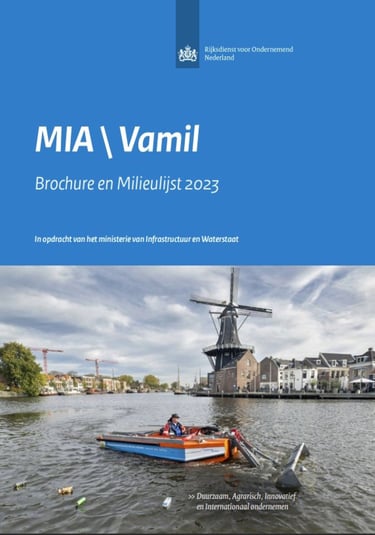
A question intensified during the COVID period, particularly due to disruptions and shortages in raw material supply. This, combined with an increasingly sustainable outlook on our environment and the Paris Agreement, has accelerated the need for change.Government incentives such as MIA/Vamil subsidies have provided additional stimulation.
Requirements have also emerged for offering product take-back guarantees.
Results
Established a strong position within the circular economy landscape, offering clear choices aligned with the Total Cost of Ownership model for property owners.
Action
Lobbying activities with the national government (Netherlands Enterprise Agency)
Inclusion in the National Environmental List
Positioning through EPD as the most sustainable roofing system on the National Environmental List
Communication campaign to building owners about the tax benefits of the roofing system (up to 12% on investment)
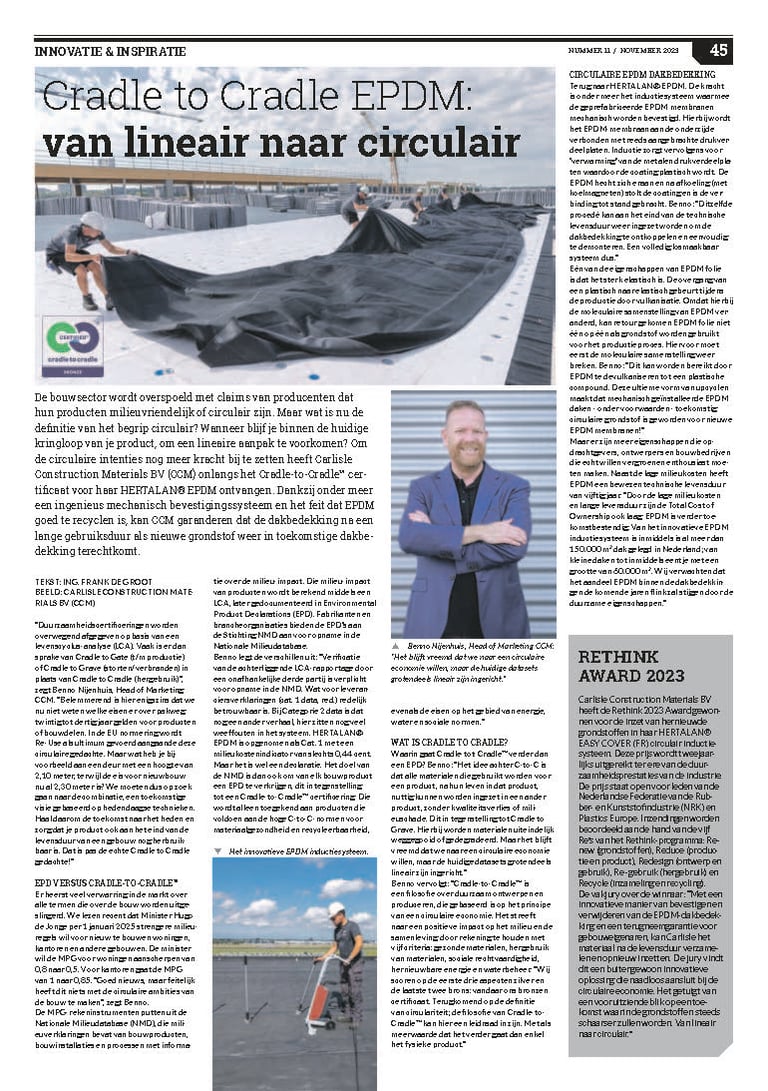
The positioning of EPDM membrane technology with induction fastening as a circular system marks a strategic breakthrough.
What began as a clear signal from the market, shortages of raw materials, evolved into a powerful answer to a critical question:
How do you secure future-proof access to essential materials?
EPDM provides a distinct technical advantage: the material can be devulcanized into high-quality raw material.
The challenge, however, lay in actually returning that recovered material into the production chain and adapting the Life Cycle Assessment (LCA) methodology accordingly. This has been successfully achieved, resulting in a significantly improved Environmental Product Declaration (EPD), which has strengthened strategic position within the National Environmental Database (NMD).
This approach not only aligns with the government’s circular ambitions but also provides tangible fiscal benefits for building owners.
This created a unique market proposition: a system that delivers both economic and ecological value.
This trajectory exemplifies my role as a Business Developer: translating technical innovation into strategic market power.
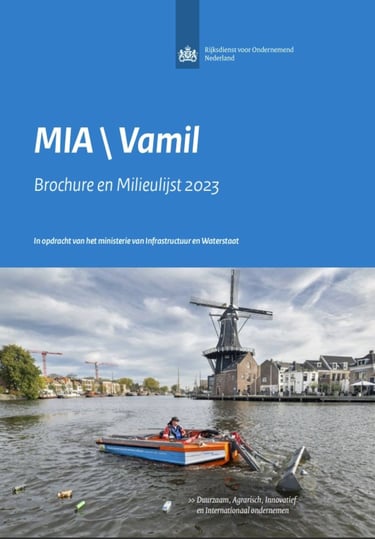
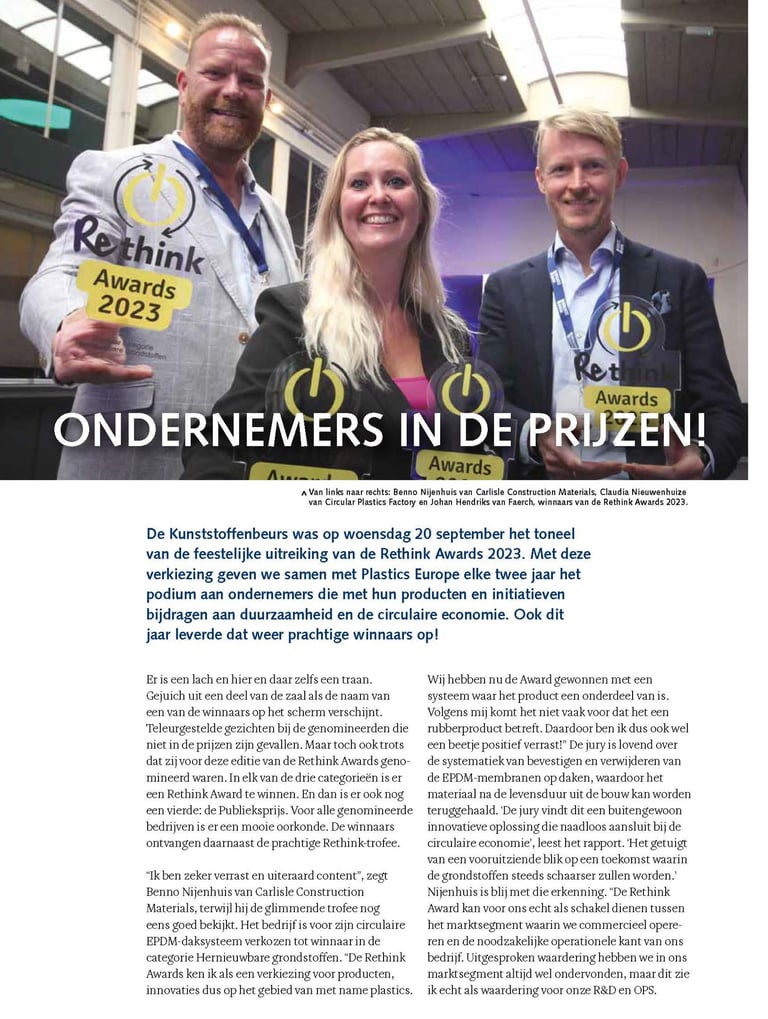
With this circular model, we have reinforced our authority, unlocked new international growth opportunities, and gained recognition through prestigious industry awards.
Circular positioning - Insight Is a Necessity
In B2B, decisions are never made by one person — they are the result of collaboration across multiple levels, both internally and externally. Internally, from the procurement manager to the C-level executive, and externally, from the building owner to the contractor or installer. Each has their own interests and pain points. By thoroughly understanding the factors of cost, lead time, technical requirements, and risk, marketing becomes truly relevant and ensures that the message resonates with all decision-makers across the value chain.
Strategic Foundation
Target group
Voor mij begint elke succesvolle positionering met een solide strategische basis. In een complexe B2B-omgeving, waar meerdere stakeholders met uiteenlopende belangen samenkomen, is het essentieel om scherp te weten wie je bedient, welke waarde je toevoegt en hoe marketing en sales elkaar versterken.
Value Proposition and Differentiation
Alignment between Marketing & Sales
Effective growth requires seamless collaboration between marketing and sales. Marketing delivers high-quality leads, and sales turns these into tangible results. By aligning messaging, materials, and market approach perfectly, we created synergy that led to higher conversion rates, shorter lead times, and a stronger market position. For me, it was essential to involve Sales from the very beginning in my vision and to keep them engaged throughout the process. This developed into an almost one-to-one collaboration, where Sales identified potential projects, while I produced well-founded content and whitepapers that substantiated our position and evidence base.
Circular Certification- the Beer Coaster
My role
In this process, my role was primarily that of inspirator and driver, ensuring the successful completion of the certification trajectory rather than acting as its content manager. From that position, I maintained direct contact with the institute to oversee process progress and ensure timely completion — while contributing supporting evidence regarding our circular performance results from the market.
Cradle-to-Cradle®
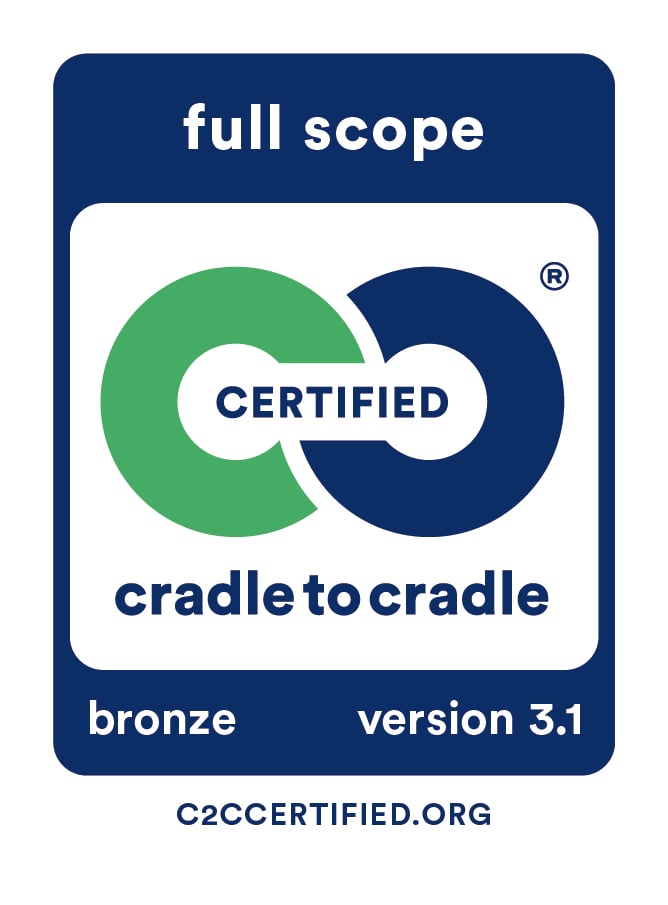
Fortunately, certification still carries significant weight across Europe, and within the sustainability spectrum several mature frameworks are available. For example, the Cradle-to-Cradle Institute grants certification following an extensive audit of the production process, supported by underlying Life Cycle Assessments (LCAs) of the materials.
DUBO® certification
This certification mark is also issued on the basis of an Environmental Product Declaration (EPD) and, in that sense, is not particularly “exciting.” What made this case interesting — and what I was able to leverage especially well for building authority and acceptance — was the ranking of all these building materials.
That ranking becomes truly valuable when your product is rated the best. Here again, it’s all about using the available frameworks intelligently to substantiate the performance of a product or system, gaining in-depth knowledge, and sharing that knowledge within our international organization.
National Environmental Database
How does a decision-maker demonstrate that they’ve chosen the most sustainable solution on the market?
A legitimate question — because sustainability must be measurable and transparent, not just a promise on paper. The key lies in the smart use of Life Cycle Assessment (LCA): beyond analyzing the product and process, it allows you to make the actual environmental impact visible and quantifiable.
This is where my strength as a Business Developer and Strategic Marketer comes into play:
where others stop at answering the question, I take it one step further. I connect disciplines that typically operate in isolation, translate complex technical data into clear and applicable strategies, identify opportunities beyond the obvious, and ensure that innovation doesn’t just get invented, but successfully lands in the market. In a proven and profitable business model.
The National Environmental Database (Nationale Milieudatabase) hosts a Viewer tool where Category 1 product data rankings are displayed. The product I focused on was ranked as the best product with the lowest environmental cost score. This achievement was the result of a long-term process of lobbying, LCA optimization, and addressing structural system flaws within the database methodology.



Whether it concerns a building owner, architect, or contractor – every stakeholder demands hard evidence before making a sustainable choice. In a market where claims are made quickly but rarely substantiated, the risk of reputational damage is simply too high. Especially within the maze of varying definitions of sustainability, certification by a recognized authority becomes the ultimate differentiator.
With such an endorsement, the need for lengthy explanations disappears; what remains is simply delivering on your promise. It is this simple yet crucial foundation – the “beer coaster” on which the entire proposition rests – that determines whether you are truly credible and positioned for the future.
That’s why I take it one step further.
Beyond translating sustainability into content, trade articles, and whitepapers, I also ensure that commitments evolve into proof – by placing certifications and measurable performance at the center of our communication.
This approach builds trust across the value chain and strengthens the market position of building materials manufacturers.
Contact
Also visit my UK profile on LinkedIn or request my CV in Dutch, English, or German.
benno.nijenhuis@outlook.com
+31 6 18724238
© 2025. Benno Nijenhuis